
Akwarystyka morska JadwigaMorska.pl


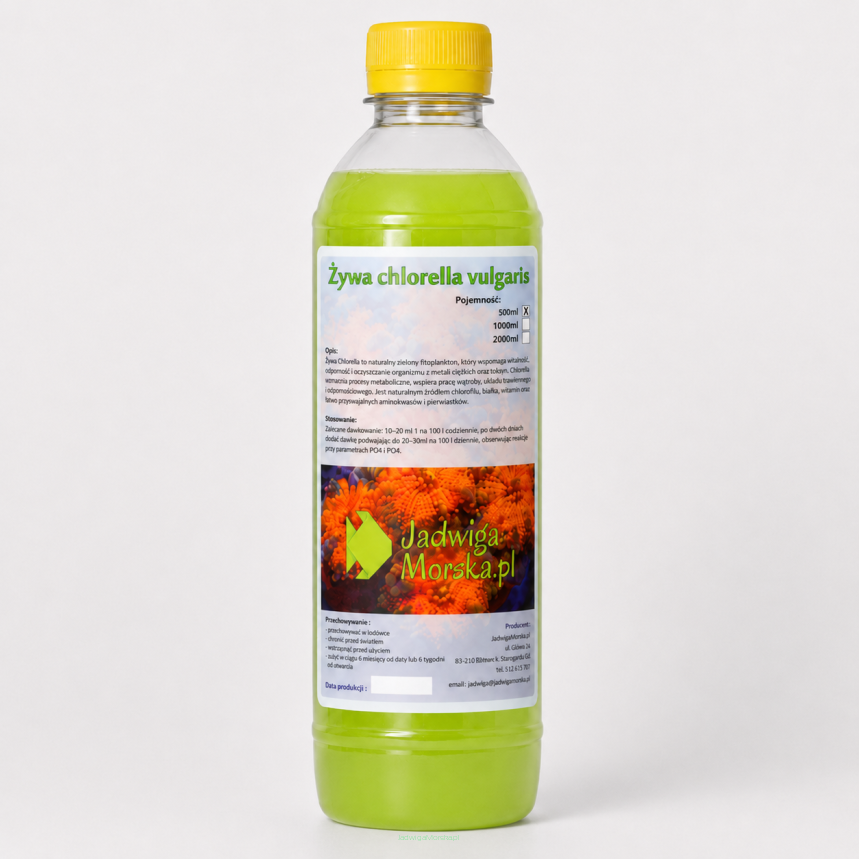
 Jest
(887 szt.)
Jest
(887 szt.)
Żywa Chlorella to naturalny zielony fitoplankton, który wspiera rozwój mikrofauny, dokarmia filtratory, poprawia biologiczną różnorodność akwarium i pomaga tworzyć stabilny łańcuch pokarmowy w akwarium morskim.
Najlepsze efekty daje przy regularnym dawkowaniu oraz w połączeniu z innymi gatunkami fitoplanktonu morskiego, takimi jak Nannochloropsis, Tetraselmis i Isochrysis.
Żywa Chlorella w akwarium morskim może być bardzo fajnym dodatkiem, ale najlepiej traktować ją jako element mieszanki fitoplanktonu, a nie jedyny pokarm.
1. Pokarm dla mikrofauny
Żywa Chlorella jest drobną jednokomórkową algą, którą mogą wykorzystywać m.in. wrotki, widłonogi, drobny zooplankton, larwy i część filtratorów. FAO podaje, że Chlorella była jedną z najczęściej używanych alg do hodowli wrotki Brachionus plicatilis, czyli klasycznego żywego pokarmu w akwakulturze.
2. Pośrednie dokarmianie koralowców
Większość korali nie „zjada” dużych ilości samej Chlorelli tak efektownie jak zooplankton, ale dzięki niej rośnie ilość drobnego życia w akwarium. Czyli Chlorella najpierw karmi mikrofaunę, a mikrofauna później staje się naturalnym pokarmem dla LPS, SPS, miękkich korali i filtratorów.
3. Wsparcie dla refugium i biologii
Żywy fitoplankton może konkurować z niepożądanymi mikroorganizmami o składniki odżywcze. Przy regularnym, rozsądnym dawkowaniu pomaga budować bardziej stabilny łańcuch pokarmowy: fitoplankton → zooplankton → korale/ryby.
4. Pobieranie NO3 i PO4
Żywa Chlorella podczas wzrostu zużywa azotany i fosforany. Nie traktowałbym jej jako głównej metody walki z NO3/PO4, ale jako biologiczne wsparcie. Efekt zależy od tego, czy komórki faktycznie pozostają żywe, są zjadane albo usuwane przez odpieniacz/filtrację.
5. Wartość odżywcza
Chlorella vulgaris ma dużo białka — często podaje się zakres około 42–58% suchej masy — oraz aminokwasy, pigmenty i związki bioaktywne. Dla akwarium oznacza to dobry „zielony” pokarm dla drobnego życia.
Chlorella jest dobra, ale nie jest idealnym samodzielnym fitoplanktonem morskim, bo zwykle ma mało lub brak kluczowych morskich kwasów tłuszczowych EPA i DHA. Badania o profilu tłuszczowym Chlorelli wskazują, że Chlorella zwykle nie jest bogata w EPA/DHA, choć może zawierać ALA.
Dlatego w akwarium morskim najlepsza jest jako część mieszanki, np.:
Chlorella + Nannochloropsis + Tetraselmis + Isochrysis
Wtedy masz lepszy profil: białko, pigmenty, zielony fitoplankton, drobną frakcję pokarmową i lepsze tłuszcze dla zooplanktonu.
Najbardziej przyda się w akwariach z:
Nie lać za dużo na raz. Zbyt duża dawka może powodować zmętnienie wody, wzrost filmu bakteryjnego, brudzenie szyb, spadek tlenu nocą lub obciążenie odpieniacza. Przy żywym fitoplanktonie lepiej działa mało, ale regularnie.
Na początek:
10–20 ml na 100 l dziennie
Po 1–2 tygodniach można zwiększyć do:
30–50 ml na 100 l dziennie
W mocno obsadzonych akwariach z dużą ilością filtratorów i mikrofauny można iść wyżej, ale obserwowałbym wodę, szyby, NO3, PO4 i reakcję korali.
Okres przydatności 8 tygodni w schłodzonej formie.