
Akwarystyka morska JadwigaMorska.pl


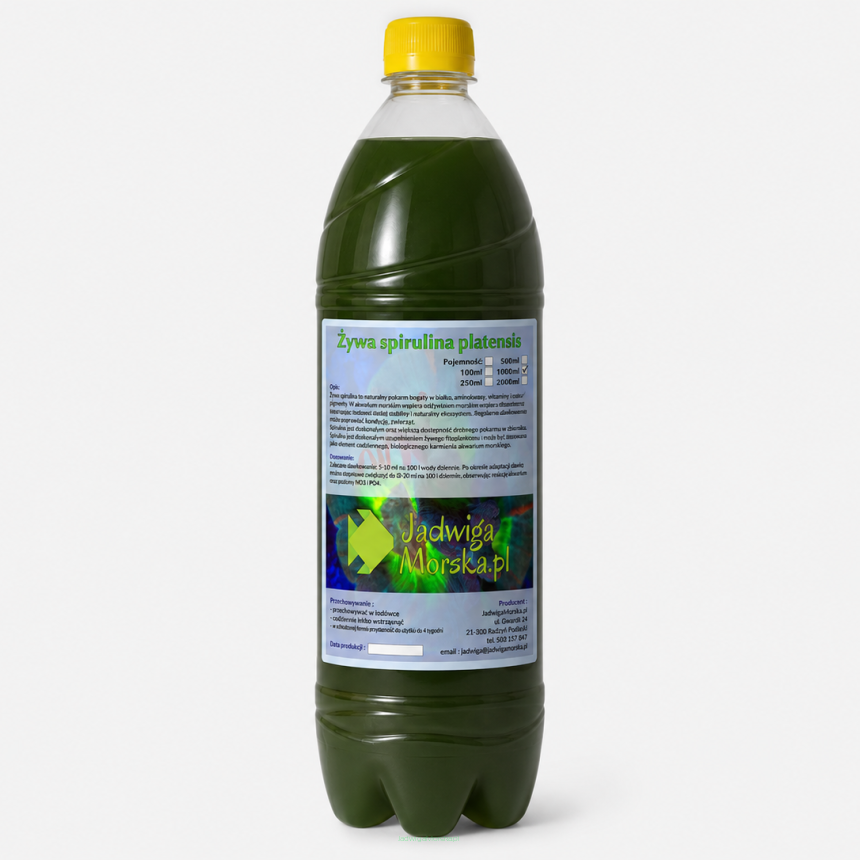
 Jest
(888 szt.)
Jest
(888 szt.)
Żywa spirulina to naturalny pokarm bogaty w białko, aminokwasy, witaminy i naturalne pigmenty. W akwarium morskim wspiera odżywianie koralowców, filtratorów oraz mikrofauny, pomagając budować bardziej stabilny i naturalny ekosystem.
Regularne dawkowanie może poprawiać kondycję zwierząt, wspierać ich wybarwienie oraz zwiększać dostępność drobnego pokarmu w zbiorniku.
Spirulina jest doskonałym uzupełnieniem żywego fitoplanktonu i może być stosowana jako element codziennego, biologicznego karmienia akwarium morskiego.
Żywa spirulina w akwarium morskim może być bardzo wartościowym dodatkiem, szczególnie jako naturalny pokarm i wsparcie biologii zbiornika.
1. Naturalny, żywy pokarm dla mieszkańców akwarium
Spirulina jest chętnie pobierana przez wiele organizmów filtrujących i drobnych zwierząt planktonożernych. Może wspierać odżywianie koralowców, małży, gąbek, rurówek, widłonogów, wrotków i innych mikroorganizmów żyjących w akwarium.
2. Wsparcie dla mikrofauny
Regularne dawkowanie żywej spiruliny może zwiększać dostępność pokarmu dla drobnej fauny w akwarium. Lepsza kondycja mikrofauny oznacza stabilniejszy, bardziej naturalny ekosystem.
3. Źródło białka, witamin i pigmentów
Spirulina jest bogata w białko, aminokwasy, witaminy, minerały oraz naturalne barwniki, takie jak fikocyjanina i karotenoidy. Dzięki temu może wspierać kondycję, wybarwienie i odporność zwierząt.
4. Pokarm dla koralowców i filtratorów
Drobne komórki spiruliny mogą być wychwytywane przez część koralowców i organizmów filtrujących. To szczególnie ważne w akwariach, w których zależy nam na naturalnym, regularnym dokarmianiu.
5. Możliwe wsparcie w ograniczaniu nutrientów
Jako żywy organizm fotosyntetyzujący spirulina podczas wzrostu pobiera z wody związki azotu i fosforu. Nie zastąpi odpieniacza, podmian czy refugium, ale może być elementem biologicznego wsparcia systemu.
6. Poprawa różnorodności biologicznej
Dodawanie żywych mikroalg i cyjanobakterii pokarmowych może pomagać w budowaniu bardziej zróżnicowanego łańcucha pokarmowego w akwarium morskim.
7. Bardziej naturalne karmienie niż suchy proszek
Żywa spirulina jest świeża, aktywna biologicznie i nie jest martwą zawiesiną, która od razu zaczyna obciążać wodę. Przy rozsądnym dawkowaniu może być łagodniejsza dla systemu niż przesadne używanie suchych pokarmów pyłowych.
Spirulina to cyjanobakteria, a nie klasyczny fitoplankton morski jak Nannochloropsis, Tetraselmis czy Isochrysis. Dlatego w akwarium morskim najlepiej traktować ją jako żywy pokarm uzupełniający, a nie jedyne źródło fitoplanktonu. Najlepsze efekty daje stosowanie jej razem z innymi żywymi kulturami planktonu.
Na początek bezpiecznie podawałbym:
5–10 ml żywej spiruliny na 100 l wody dziennie
Po 1–2 tygodniach, jeśli akwarium dobrze reaguje, można zwiększyć do:
10–20 ml na 100 l dziennie
Przy mocno obsadzonym akwarium z dużą ilością koralowców, filtratorów i mikrofauny można dojść orientacyjnie do:
20–30 ml na 100 l dziennie
Pierwszy tydzień:
5 ml / 100 l dziennie
Drugi tydzień:
10 ml / 100 l dziennie
Później:
zwiększać tylko wtedy, gdy nie rosną NO3, PO4 i nie pojawia się nalot/cyjano.
Najlepiej podawać wieczorem lub przy przygasającym świetle, gdy koralowce mocniej żerują. Można też wyłączyć odpieniacz na 30–60 minut, żeby spirulina nie została od razu usunięta z wody.
Okres przydatności w schłodzonej formie 4 tygodnie.